
This post contains affiliate links. As an Amazon Associate, we earn from qualifying purchases.
You don’t need a drawer full of gadgets to cook at home. A short list of essential kitchen tools handles almost every recipe on this site, and if you take care of them, they last for years.
Here’s what each tool does and why it earns a spot, followed by what to buy first on a tight budget, what’s worth adding later and how to make it all last.
Cutting and Chopping
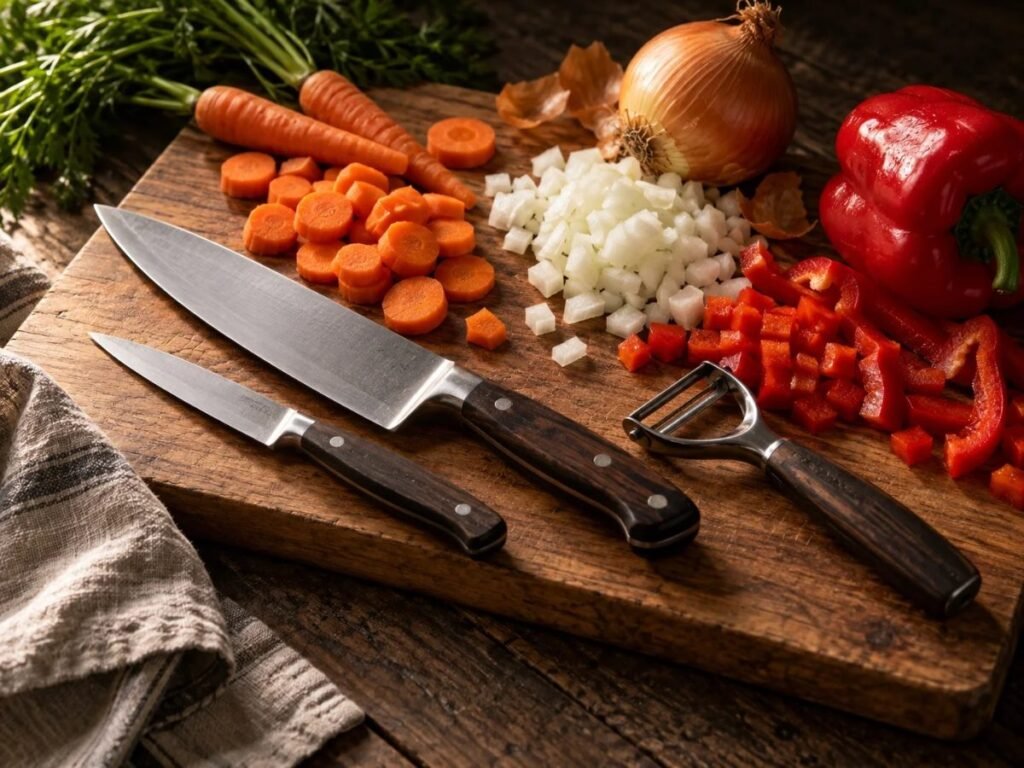
Chef’s Knife: The tool you’ll use most. A sharp chef’s knife makes chopping faster and safer, and it doesn’t need to be expensive as long as you keep it sharp.
Cutting Boards: Two is ideal: one for raw meat and one for produce and bread, so you never have to worry about cross-contamination.
Kitchen Scissors: For snipping herbs, trimming fat off chicken, opening packages and cutting pizza.
Peeler: Peels potatoes, carrots and apples much faster than a knife.
Cooking and Mixing
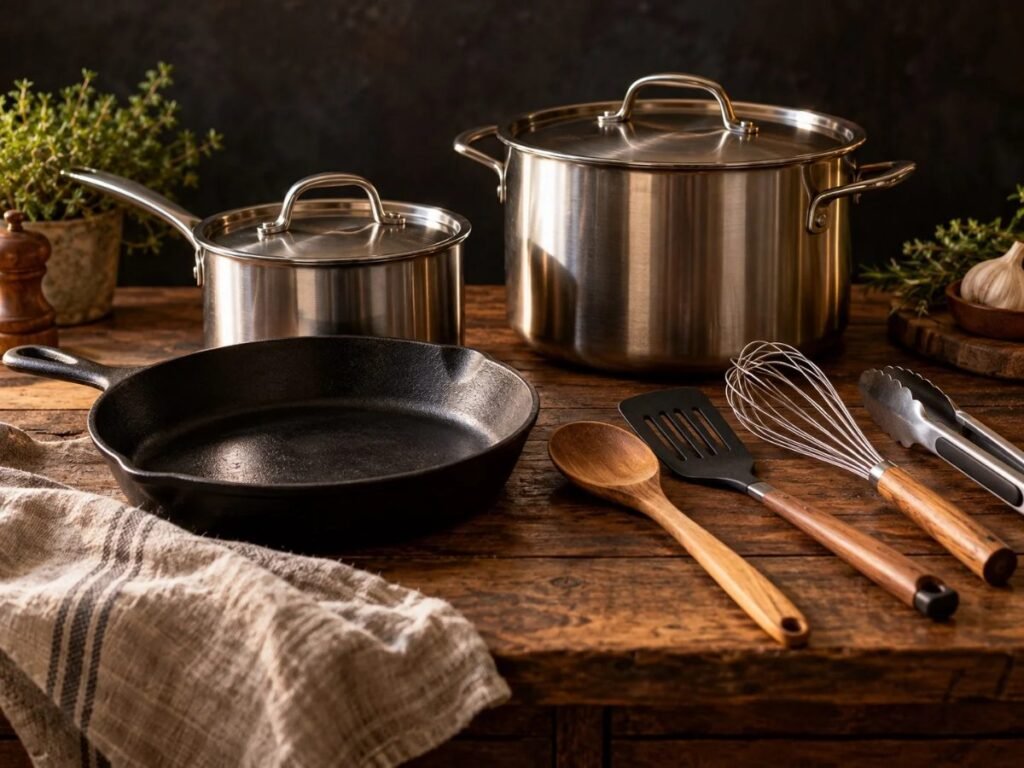
Saucepan and Frying Pan: The two pans you’ll reach for every day. A medium saucepan cooks rice, pasta sauce and soup, and a large frying pan handles eggs, stir-fries and searing.
Baking Pans: A rimmed sheet pan roasts vegetables and sheet pan dinners and bakes cookies. Add an 8- or 9-inch square pan and a 9×13 dish for casseroles.
Wooden Spoon: Cheap, gentle on nonstick pans and good for stirring anything.
Spatula: A silicone spatula scrapes bowls clean, and a flat turner flips eggs, pancakes and burgers.
Whisk: For beating eggs, mixing batters and smoothing out sauces and gravy.
Tongs: For flipping chicken, tossing salads and pulling pasta out of the pot.
Measuring and Prep
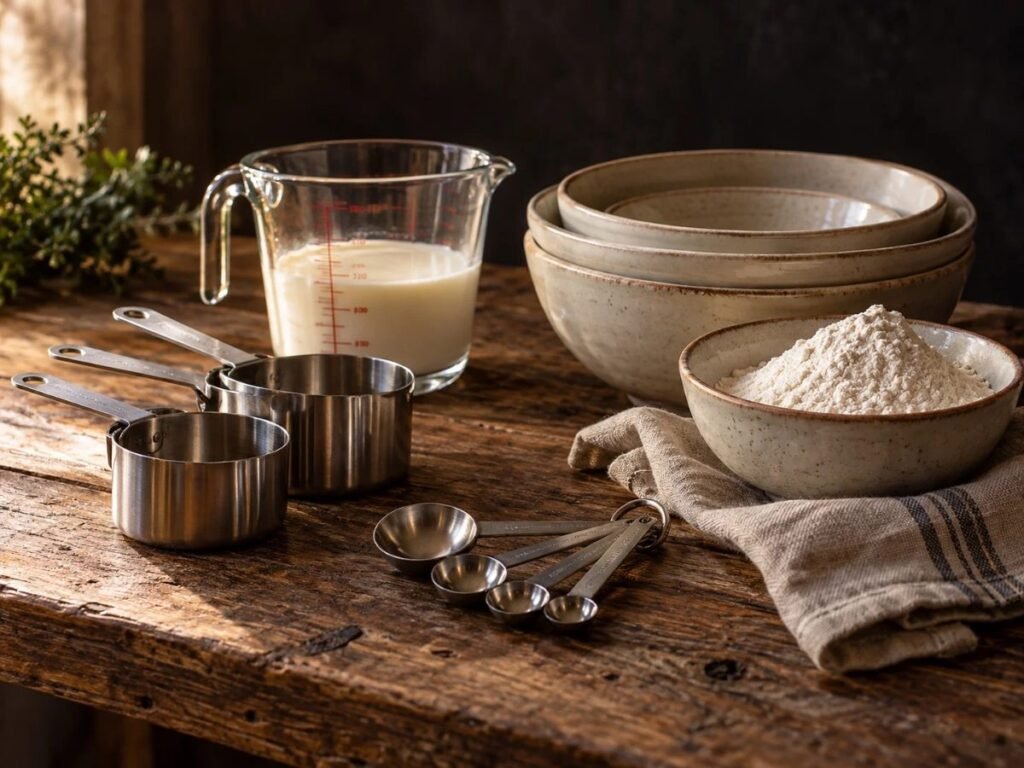
Measuring Cups and Spoons: Baking needs accurate measurements. Get one set of dry cups, one liquid measuring cup and a set of spoons.
Mixing Bowls: A nesting set of three sizes covers mixing, marinating and tossing salads, and stores in the space of one bowl.
Safety and Storage
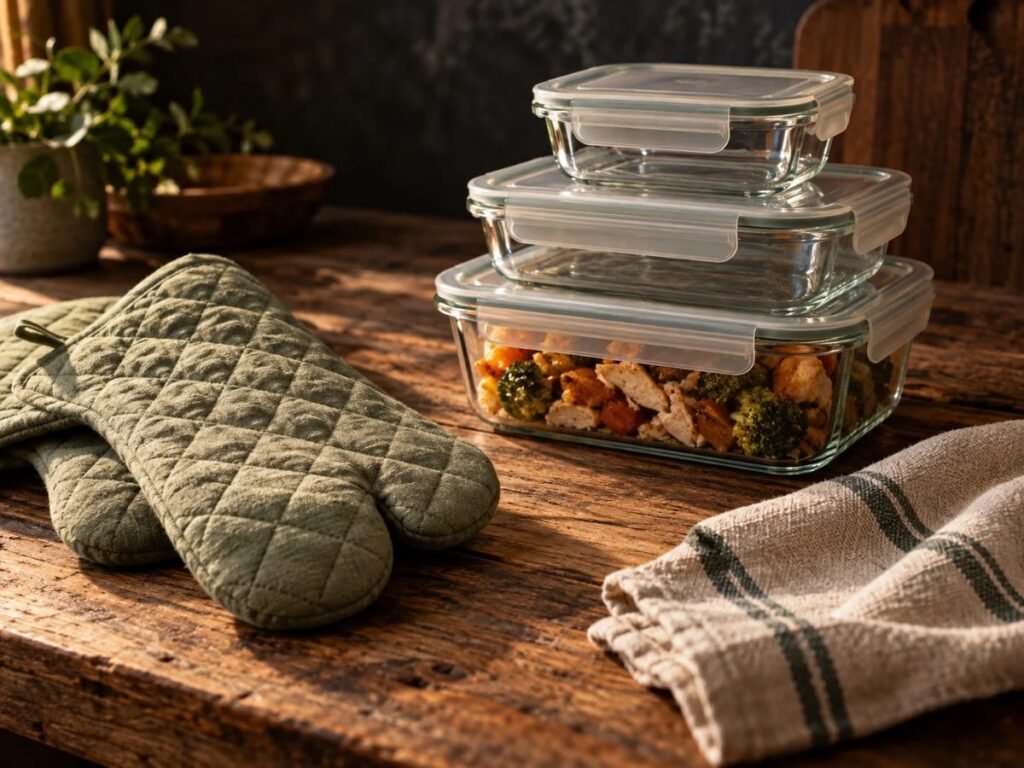
Oven Mitts: Thick mitts or pot holders for anything coming out of the oven or off the stove.
Storage Containers: Airtight containers keep leftovers and prepped ingredients fresh, which means less food thrown out.
What to Buy First on a Tight Budget
You don’t need everything on this list on day one. If you’re starting from nothing, buy in this order and add the rest as your recipes call for it:
- A chef’s knife and one cutting board
- A large frying pan and a medium saucepan
- A sheet pan
- A wooden spoon and a spatula
- Measuring cups and spoons
Those five steps cover most everyday recipes, including everything in our beginner’s guide to cooking from scratch.
Worth Adding Later
- Instant-read thermometer: the only reliable way to know meat is done.
- Dutch oven: for soups, stews, chili and one-pot pasta.
- Cast iron skillet: browns better than nonstick and goes from stovetop to oven.
- Slow cooker: turns inexpensive cuts into tender dinners while you’re out.
- Colander: for draining pasta and rinsing beans and produce.
- Salad spinner: dries washed greens so dressing sticks.
How to Make Your Tools Last
- Wash knives by hand and dry them right away. The dishwasher dulls the edge.
- Keep wood out of the dishwasher. Wooden spoons and cutting boards crack when they soak or go through a hot cycle.
- Use wood or silicone on nonstick pans. Metal utensils scratch the coating.
- Dry cast iron on the stove and rub it with a thin coat of oil after washing.
- Sharpen your knife. A sharp knife is safer than a dull one, because it doesn’t slip.
You might also like: Beginner’s Guide to Cooking from Scratch and How to Cook Chicken Perfectly Every Time.
Kitchen Tool Questions
What kitchen tools does a beginner really need?
A chef’s knife, a cutting board, a frying pan, a saucepan, a sheet pan, a wooden spoon and measuring cups. Everything else can wait.
Is an expensive knife worth it?
A mid-priced chef’s knife that you keep sharp will outperform an expensive one that has gone dull. Put the money toward sharpening before upgrading.
How many cutting boards do I need?
Two is ideal: one for raw meat, poultry and fish, and one for produce and bread. It’s the simplest way to avoid cross-contamination.