

This post contains affiliate links. As an Amazon Associate, we earn from qualifying purchases.
When dinner comes out bland, dry or soggy, the recipe usually isn’t the problem. It’s one of a handful of habits, like a pan that’s too hot, too much food crammed in at once or salt added only at the end. And when you’re cooking on a budget, a ruined dinner is money in the trash.
Here are the 11 most common cooking mistakes, how to fix each one, and quick rescues for when dinner has already gone wrong.
Jump to a section
- Not Reading the Recipe All the Way Through
- Cooking Everything on High Heat
- Overcrowding the Pan
- Skipping Seasoning (or Adding It Too Late)
- Overcooking Meat
- Ignoring Rest Time
- Using the Wrong Pan
- Guessing Instead of Measuring (When It Matters)
- Forgetting to Taste and Adjust
- Not Preheating the Pan or Oven
- Cutting Food in Uneven Sizes
- Quick Fixes When Dinner Has Already Gone Wrong
- Free Printable: Kitchen Cheat Sheet
- Cooking Mistake Questions
1. Not Reading the Recipe All the Way Through
The mistake: Jumping straight into cooking without reading the full recipe, only to realize halfway through that something needed to marinate, rest, or cook longer than expected.
How to fix it:
- Read the recipe from start to finish before you begin.
- Look for prep steps that happen before cooking (marinating, softening butter, preheating the oven).
- Check cook times so dinner doesn’t end up being an hour late.
Savvy tip: A 60-second read-through can save a whole meal.
2. Cooking Everything on High Heat
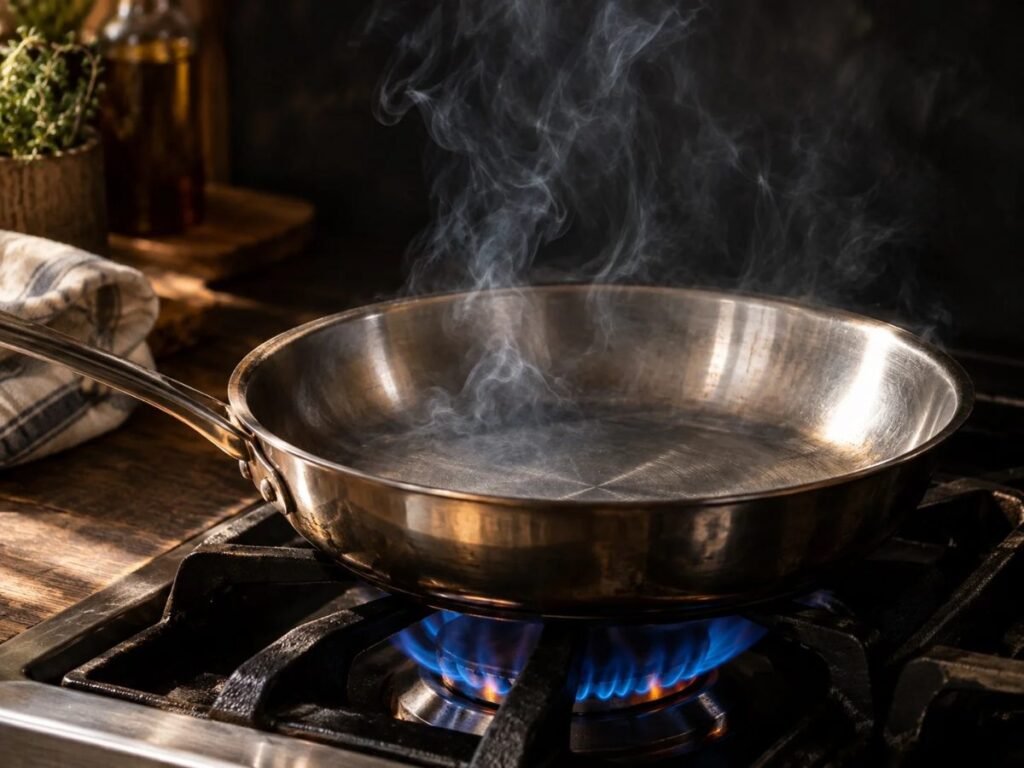
The mistake: Cranking the heat up because you’re hungry or in a rush. Which often leads to burnt outsides and raw insides.
How to fix it:
- Use medium heat for most stovetop cooking.
- High heat is best for quick sears, not full cook times.
- Give food time to cook evenly.
Savvy tip: When in doubt, lower the heat. You can always turn it up, but you can’t un-burn dinner.
3. Overcrowding the Pan
The mistake: Trying to cook too much food at once, causing it to steam instead of brown.
How to fix it:
- Cook in batches if needed.
- Leave space between pieces of meat or vegetables.
- Use a larger pan when possible.
Savvy tip: Food needs space to brown. If the pieces are touching, they’ll steam.
4. Skipping Seasoning (or Adding It Too Late)
The mistake: Forgetting to season throughout the cooking process or only adding salt at the very end.
How to fix it:
- Season in layers: during prep, while cooking, and at the finish.
- Taste as you go (when safe to do so).
- Don’t be afraid of salt; it brings out flavor, not just saltiness.
Savvy tip: If food tastes flat, it probably needs salt, not more sauce.
5. Overcooking Meat

The mistake: Cooking meat “just to be safe” until it’s dry and tough.
How to fix it:
- Use a meat thermometer instead of guessing.
- Know the safe temperatures: 165°F for chicken and turkey, 160°F for ground beef and pork, and 145°F with a 3-minute rest for steaks, chops and roasts.
- Thick roasts and steaks keep climbing a few degrees as they rest, so take them off the heat as soon as they reach temperature.
- Let meat rest before slicing so the juices stay inside.
Savvy tip: Juicy meat is cooked properly, not longer.
6. Ignoring Rest Time
The mistake: Cutting into meat or baked goods immediately after cooking.
How to fix it:
- Let meats rest 5–10 minutes before slicing.
- Allow baked goods to cool so they set properly.
Savvy tip: Resting isn’t wasted time, it’s part of the recipe.
7. Using the Wrong Pan

The mistake: Using a pan that’s too small, too thin, or not meant for the cooking method.
How to fix it:
- Use heavy-bottomed pans for even heat.
- Nonstick for eggs and delicate foods.
- A cast iron skillet or stainless steel for browning.
Savvy tip: One heavy skillet and one nonstick pan cover most of what you’ll cook.
8. Guessing Instead of Measuring (When It Matters)
The mistake: Eyeballing ingredients for baking or sauces where ratios matter.
How to fix it:
- Measure baking ingredients carefully.
- Follow sauce ratios until you’re confident adjusting.
Savvy tip: Cooking is flexible, but baking is science.
9. Forgetting to Taste and Adjust
The mistake: Serving food without tasting it first.
How to fix it:
- Taste before serving.
- Adjust salt, acid (lemon or vinegar), or herbs as needed.
Savvy tip: A final taste check can turn a good meal into a great one.
10. Not Preheating the Pan or Oven
The mistake: Putting food into a cold pan or an oven that is still heating up, so it steams, sticks or bakes unevenly.
How to fix it:
- Give a skillet a minute or two over the heat before adding oil and food.
- Wait for the oven to reach temperature before the pan goes in, especially for baking and roasting.
- Listen for the sizzle. If food doesn’t sizzle when it hits the pan, the pan isn’t ready.
Savvy tip: Preheating feels like waiting, but it shortens the cooking time and gives better browning.
11. Cutting Food in Uneven Sizes
The mistake: Chopping vegetables or meat into pieces of different sizes, so the small ones burn while the big ones are still raw.
How to fix it:
- Cut everything that cooks together to about the same size.
- Start dense vegetables like potatoes and carrots before quick ones like zucchini and peppers.
- Pound chicken breasts to an even thickness so they cook at the same rate.
Savvy tip: Even pieces matter more than perfect knife skills.
Quick Fixes When Dinner Has Already Gone Wrong
- Too salty: add more of the unsalted base, such as broth, tomatoes, rice or pasta, and finish with a squeeze of lemon.
- Too bland: add salt first, then something acidic like lemon juice or vinegar.
- Too spicy: stir in sour cream, yogurt or a little sugar, or serve it over plain rice.
- Sauce too thin: simmer it uncovered, or stir in a teaspoon of cornstarch mixed with cold water.
- Sauce too thick: loosen it with a splash of broth, milk or pasta water.
- Dry meat: slice it thin and serve it with gravy, pan sauce or warm broth.
- Burnt on the bottom: don’t stir or scrape. Move the unburnt part to a clean pot and leave the rest behind.
Free Printable: Kitchen Cheat Sheet
Several of these mistakes come down to temperature and timing. This one-page cheat sheet puts safe cooking temperatures and storage times in one place.
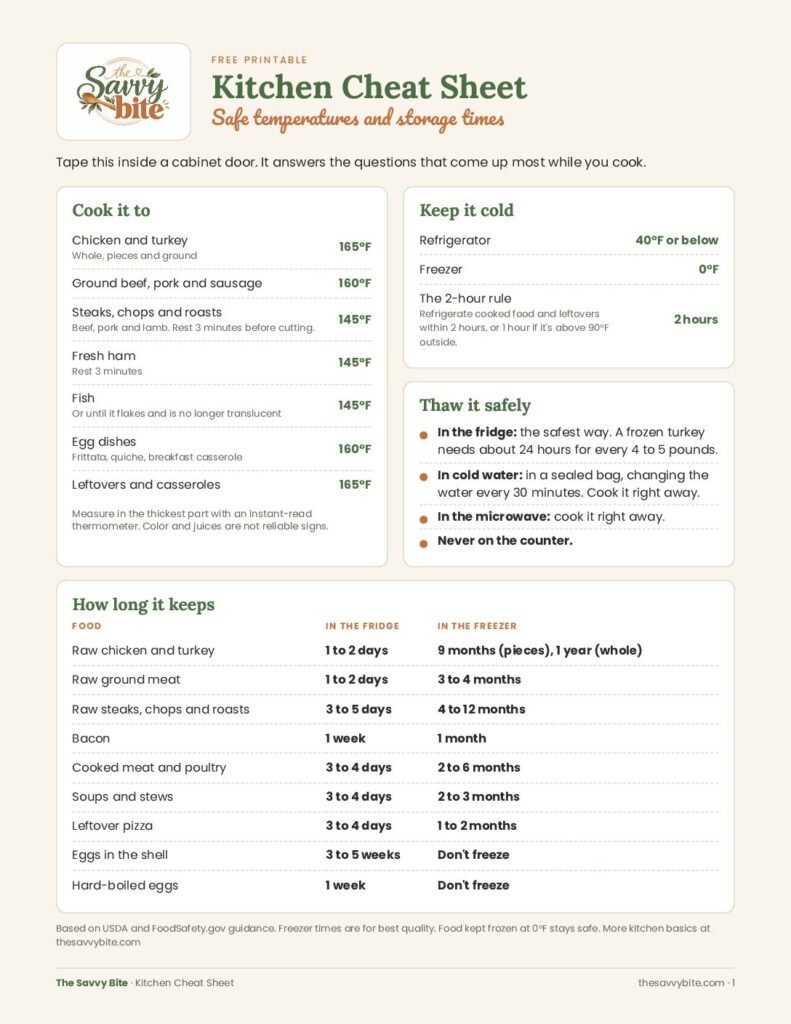
Kitchen Cheat Sheet
One page: safe cooking temperatures, thawing methods and how long food keeps in the fridge and freezer. Free, with no sign-up needed.
See all of our free printables.
Cooking Mistake Questions
What is the most common cooking mistake?
Under-seasoning and using the wrong heat. Most disappointing dinners need more salt, a lower burner or both.
Why does my food stick to the pan?
The pan wasn’t hot enough, or the food was moved too soon. Meat releases on its own once it has browned, so give it another minute before you try to flip it.
How do I get better at cooking?
Cook a small number of simple recipes again and again. Our beginner’s guide to cooking from scratch has a good list to start with.